Sales Budget: Guide for Sales Managers with Templates & FAQs

A sales budget is no different, but it’s best to find a spreadsheet that you’re comfortable working with. Using a spreadsheet that’s too simplistic might overlook some of the things that your company will need to factor in. Too complex, and you may get too bogged down in the details to focus on actually running your business. Monthly sales budgets, as expected, are simpler and smaller than annual and quarterly budgets. Both your sales reps and customers can provide valuable feedback to inform your sales budget. Your sales reps are close to your customers, so they can tell you more about buyer expectations, disappointments, and wants.

Who should be involved in creating a sales budget?

With competitors likely investing more into sales, rivalry could get a little heated. In this blog, we explore how sales budgets support growth and how to set your own. Here’s an example of a sales budget that details projections for a team that’s launching a new offer this year and planning to increase the price in the fourth quarter. At the end of the day, it’s okay to adjust your sales budget if your reality isn’t matching your prediction, whatever the reason may be. It’s important to ensure that your sales budget reflects a realistic outcome; this demonstrates transparency, achievability, and commitment to accuracy. All of this insight will help create a more reliable sales budget document.

When you’ve thoroughly analyzed all internal and external factors that might influence sales, it’s time to calculate your budget. This is as simple as estimating the total volume of sales and unit prices over a specific time period. Talking to your customers directly gives you feedback of immeasurable value. For example, if you were setting a sales budget for Q3 of the fiscal year, it would help to look at Q3 sales figures from the previous year for an accurate comparison.

How can a sales budget be effectively managed?

  • Once you have your budget in place, you focus on increasing income and growing overall.
  • A sales budget must also include your team’s projected sales volume in the number of units, the price per unit (also known as the sales price), and the projected sales revenue.
  • It’s important to ensure that any sales financial plan reflects company goals.
  • Learn how zero-based budgeting works, why it beats other methods, and how to do it—step by step.
  • Historical sales data and market trends are vital in creating a realistic sales forecast.

This helps companies determine their master budget and identify other important growth metrics. After you have collected and analyzed your data, you can use it to generate your sales forecast. Depending on the sales forecasting method and tool you use, you may need to apply formulas, algorithms, models, or simulations to produce your forecast.

#1 – Overestimating sales performance

On the other hand, B2B organizations often see sales slow down during both winter and summer holidays. A sales budget is a helpful tool for leaders to reference when making long-term spending and investment decisions. how to create sales budget You could also use sales growth to adjust your sales commission model and increase employee incentives.

  • These two different perspectives will give you better insight into your business.
  • Stay ahead with the latest in sales comp, revenue trends, insider tips, and must-know strategies—delivered right to your inbox.
  • Having a budget in place is essential to ensure you have enough resources to cover expenses and support the initiatives needed to grow your business.
  • Engage key stakeholders, including the sales team, finance department, and senior management.

Better business decisions

Making budgeting mistakes can contribute to false projections, which not only can cost organizations time and money but also threaten a business’s ability to remain open. Income will change over time, as will your customer base and the expenses your business incurs in attracting them. Next, you’ll list all of your business expenses so you can better prepare for them, ideally with funds that you’ve already set aside.

I recommend creating a budget category called something like “Month-Specific Stuff” or “Alternating Expenses” or “Discretionary” (if you like using big words). Then just add whatever lines you need for that month and delete the ones from last month you no longer need. While your budget shouldn’t change too much from month to month, the fact is, no two months are exactly the same. That’s why you need to create a new budget every single month—before the month begins. And if the idea of doing a bunch of addition and subtraction seems like a lot, don’t stress.

Be sure to list out how you will achieve your upcoming goals, with benchmarks you’ll meet along the way. Sales budgets and the insight they offer have a variety of applications. You expect to receive 60% of payments upfront and 40% within 60 days. ExcelDemy is a place where you can learn Excel, and get solutions to your Excel & Excel VBA-related problems, Data Analysis with Excel, etc. We provide tips, how to guide, provide online training, and also provide Excel solutions to your business problems. These two different perspectives will give you better insight into your business.

Sales reps will ultimately drive your sales so make sure to factor in the size of your team to ensure your sales budget aligns with your sales team’s capacity. All three of these elements will help drive the creation and upkeep of your sales budget. These spreadsheets will provide invaluable insight while you’re creating your sales budget. Beyond budgets, AI and other technical solutions are changing the game for small business management. Thanks to small business email marketing, marketing software, sales software, SEO for startups, and CRM for startups, SMB owners can manage more customer information than ever before. As with any business-related strategy, the creation of a small business budget presents potential pitfalls.

Continuous monitoring helps you stay on track and make informed decisions. While these terms may seem similar, understanding the income statement vs balance sheet is crucial for a well-rounded view of financial health. Comprehending these key elements is vital for the creation of realistic and precise sales budgets.

There are some general steps you can follow when creating a business budget, but the specifics may vary depending on your company and the budgeting method you choose. Similar to Example #2, this table shows how a monthly sales budget can be a bit more detailed. It shows off expected numbers for individual months rather than quarters. But the increases aren’t quite as dramatic as they are when captured quarterly.

Tracking and visualizing specific goals has a significant positive impact on sales productivity. Sales reps that are able to visualize progress towards sales goals through data visualization are more likely to improve their sales numbers. This will then help the company as a whole continue to grow economically and expand. Here is a breakdown of what a sales budget is, the difference between a sales budget and a forecast, and the step-by-step process of budgeting sales.
What is APQP ? APQP Phases APQP Checklist IATF Core Tools

What is the full form of AP in manufacturing

And, just like https://www.bookstime.com/articles/vendor-master-data-management APQP, that same approach is used in many industries. The following glossary or acronyms are those most used in internal communications within the manufacturing industry. The radial depth of cut, denoted as AE, refers to the engagement of the tool with the workpiece in the radial direction. It is the distance the tool steps over into the workpiece, perpendicular to the tool’s axis. The purpose of this phase is to develop design features into nearly the final form of the product. The purpose of this phase is to ensure that customer’s needs and expectations are clearly understood.

What is the full form of AP in manufacturing

FMEA: Failure Mode and Effects Analysis

What is the full form of AP in manufacturing

Each function such as product development needs a Product design team. The management should assign the responsible person for the APQP process. The APQP, or Advanced Product Quality Planning, https://www.cinci-parks.org/9-best-outsourced-accounting-firms-to-consider-in/ is a proven approach for developing a new product to be made in high volume and under strict quality, timing, and cost requirements. Geometry, design features, details, tolerances and refinement of special characteristics are all reviewed in a formal Design Review.

Understanding Acronyms and Abbreviations

It’s critical to comprehend the differences between CFE and CFO roles before beginning the application process. Basically, APQP deals with the entirety of the process – from receiving a business enquiry all the way to the AP automation for manufacturing companies finished product. Both of these methods help guarantee the quality of a product before it is released into the market. The output of manufacturing is a tangible product, such as a car, smartphone, or packaged food item.

What is the full form of AP in manufacturing

Free, no signup required:

  • Manufacturing is the process of transforming raw materials, components, or parts into finished goods that are ready for use or sale.
  • When there are problems, they are identified early in the process, while the cost to change or fix them is lowest.
  • Following these rules shows a strong commitment to keeping workers safe, which is part of quality assurance.
  • Companies keep their inventory supply flowing without experiencing shipment cut-off delays from suppliers from overdue payments.
  • Setting environmental compliance as a top priority can help you operate a profitable business in Andhra Pradesh and make a beneficial impact on the environment and society.

APQP is broader in scope than DFSS and scalable to perceived risk each supplier, design or process poses on program success. In this phase, the manufacturing system/processes, PFMEA, and control plans are developed to achieve the right quality products. Enterprise Resource Planning (ERP)ERP software can be used at all levels of management to track current resources (i.e. raw materials, production capacities, cash) and commitments (i.e. invoices, POs, payroll). It allows data sharing between manufacturing, purchasing, sales, human resources, accounting, and other departmental systems to facilitate decision making and tracking. API manufacturing involves a wide array of complex chemical or biological processes. The synthesis of APIs from raw materials requires multi-step procedures that utilize a variety of high-tech processing technologies.

What is the full form of AP in manufacturing

Apply for the Consent for Operation (CFO) after your facility is prepared for use. CFO and CFE applications are processed in a comparable manner. You will be required to submit additional documentation pertaining to the operational phase as well as updated information. Proceed with the building and installation of your facility after obtaining the CFE. Make sure that all safety procedures and pollution control measures are carried out in accordance with the authorized plans. Your application will be approved by the APPCB, and you will receive the Consent for Establishment (CFE) if all requirements are met and the inspection is positive.

Finding Safe and Reliable Online Casinos in Australia for a Secure Gaming Experience

In the evolving landscape of gaming entertainment, players must prioritize security and reliability when choosing where to engage their interests. Ensuring that a platform adheres to high security standards and operates transparently regarding financial matters is paramount for an enjoyable experience.

Moreover, players expect robust customer service ratings, so they can confidently seek assistance whenever needed. Strong player protections combined with clear gaming regulations contribute to a safer environment, allowing individuals to focus on their enjoyment without concerns over fairness or potential disputes.

Additionally, withdrawal efficiency becomes a key factor in selecting a gaming venue, as timely access to funds is crucial for maintaining trust. A platform’s commitment to player rights and dispute resolution processes reflects its dedication to fostering a respectful and responsible relationship with its patrons.

Ultimately, understanding these elements can help prospective players make informed decisions and enjoy their gaming experiences in a secure and responsible manner.

Identifying Regulatory Licenses: What to Look For

Identifying Regulatory Licenses: What to Look For

When exploring virtual gambling platforms, understanding the regulatory licenses they hold is critical. Each jurisdiction has its own licensing authority that ensures operators adhere to established security standards and financial transparency. Before signing up, check for licenses from reputable organizations, such as the UK Gambling Commission or the Malta Gaming Authority, as these entities enforce player protections and enforce gambling responsibility.

Another key aspect is the presence of a dispute resolution mechanism. A strong customer service rating often reflects how well a platform addresses player concerns. Look for options such as live chat, email, or telephone support that operates around the clock, showing commitment to user satisfaction.

Withdrawal efficiency is another important factor. Regulatory bodies often require transparency in processing withdrawals, reflecting a commitment to safeguarding player rights. Platforms that uphold high standards in this area not only enhance user trust but also promote a fair gaming environment.

Ensuring compliance with regional laws and regulations is vital, as this contributes to the overall security and stability of the gaming experience. Players should always verify that their chosen platform prioritizes player protections, thereby minimizing risks associated with online gambling.

Understanding Secure Payment Methods for Australian Players

Understanding Secure Payment Methods for Australian Players

For players in Australia, selecting a gambling venue requires a careful examination of various factors, particularly when it comes to financial transactions. Secure payment options play a significant role in ensuring player rights are upheld and financial transparency is prioritized.

One crucial aspect to consider is the type of payment methods available. Here are several widely used options:

  • Credit and Debit Cards: These are typically the most convenient tools for depositing and withdrawing funds.
  • E-Wallets: Services like PayPal, Skrill, and Neteller offer an extra layer of security and swift transactions.
  • Cryptocurrencies: Digital currencies like Bitcoin increasingly cater to those seeking anonymity and rapid transfers.

Each payment method comes with its own set of regulations and security standards. Players should ensure that their chosen method complies with local gaming regulations and is under the oversight of a reputable licensing authority. This not only protects player funds but also ensures adherence to financial integrity.

Moreover, when assessing gaming platforms, it’s advisable to check customer service ratings related to payment processes. Exceptional customer support can facilitate a better experience, especially during disputes concerning withdrawals or transactions. Effective dispute resolution channels are crucial for resolving any issues swiftly.

Withdrawal efficiency is another key factor. Players should look for platforms that guarantee quick processing times while remaining compliant with the required regulations. Knowing how long it typically takes to access winnings can minimize frustrations and enhance the overall gaming experience.

In summary, understanding secure payment methods is paramount for Australian players. Emphasizing gambling responsibility is essential, and it starts with the ability to make informed choices regarding financial transactions and the platforms chosen for entertainment. By ensuring their gaming venue follows recognized security standards and regulations, players can enjoy their experience with confidence.

Evaluating Bonus Offers: Maximizing Safety and Benefits

When assessing bonus offers within the iGaming sector, it is vital to scrutinize them through the lens of player safety and benefits. Start by reviewing the customer service ratings of various platforms, as robust support can be crucial in resolving issues or disputes related to bonuses. High ratings often indicate a commitment to player rights and satisfaction, providing peace of mind.

It is also essential to consider gambling responsibility principles that these platforms uphold. Bonuses should encourage mindful gaming rather than leading to reckless behavior, so look for operators that promote responsible gambling practices. This alignment can enhance your gaming experience and ensure you’re engaging with an ethical operator.

Another important factor is the operator’s adherence to gaming regulations. Always verify if the platform is licensed by a reputable licensing authority, which serves as a safeguard for players. A valid license signifies compliance with strict standards that dictate fairness and security, making it essential for a safe gaming environment.

Withdrawal efficiency is another crucial aspect to evaluate. A platform that processes withdrawals quickly demonstrates a commitment to player protections and transparency. Delays in withdrawals can be indicative of deeper issues that may affect overall player experience and safety.

Lastly, familiarize yourself with the platform’s dispute resolution mechanisms. An established and clear process can significantly enhance your confidence and provide reassurance that any issues will be addressed swiftly and fairly. By prioritizing these elements when evaluating bonus offers, players can maximize both their safety and the potential benefits of their gaming experience.

Reading Player Reviews: Building Trust and Reliability

Reading Player Reviews: Building Trust and Reliability

In the world of virtual gaming, player feedback serves as a crucial tool for assessing the integrity of various platforms. Validating experiences through player reviews can lead you towards venues that prioritize financial transparency and provide outstanding customer service ratings. By examining these testimonials, you gain insight into withdrawal efficiency, ensuring that you won’t face unnecessary delays when cashing out your winnings.

The importance of dispute resolution processes cannot be understated; players often recount their experiences in overcoming challenges with various operators. Reviews often highlight the effectiveness of these systems, showcasing how well a casino protects player rights in accordance with established gaming regulations. Ensuring proper licensing authority oversight further adds an extra layer of credibility, which can significantly influence one’s decision-making process.

A strong focus on player protections is crucial. Evaluating feedback can shed light on how well a platform implements security standards to safeguard user data and transactions. This scrutiny allows prospective players to make informed choices, ultimately leading to a safer gaming experience. For enthusiasts seeking high returns, exploring reviews that mention the best australian casino sites can be particularly rewarding.

In essence, player reviews not only act as a guide but also help forge a sense of community among users. By sharing experiences, players can collaborate to foster a more reliable gaming environment, elevating the overall experience for all involved.

Q&A:

What criteria should I look for when choosing a safe online casino in Australia?

When selecting a safe online casino in Australia, consider the following criteria: licensing and regulation by a reputable authority, secure payment options, fair game practices verified by independent auditors, user reviews and ratings, and accessible customer support. These factors ensure that the casino operates legally and offers a secure environment for players.

Are Australian online casinos required to have licenses?

Yes, online casinos targeting Australian players must obtain a license from an appropriate regulatory body. The most recognized regulators include the Northern Territory Government and the Australian Capital Territory. These licenses ensure that casinos adhere to strict standards regarding fairness, security, and responsible gambling practices.

How can I tell if an online casino is trustworthy?

To determine if an online casino is trustworthy, check for several indicators: Look for licenses from well-known authorities, verify that the casino uses secure encryption technology for transactions, read reviews from other players, and check if they provide transparent terms and conditions. Additionally, reputable casinos often display certifications from independent testing agencies that audit their games for fairness.

What are the most secure payment methods for online gambling in Australia?

Some of the most secure payment methods for online gambling in Australia include credit and debit cards (like Visa and Mastercard), e-wallets (such as PayPal and Skrill), and bank transfers. Choosing options with a strong reputation for security helps protect your financial information while ensuring safe deposits and withdrawals at online casinos.

What should I do if I encounter issues with an online casino?

If you encounter issues with an online casino, start by contacting their customer support team for assistance. Most reputable casinos provide multiple contact methods, such as live chat, email, and phone support. If the issue remains unresolved, consider reaching out to regulatory bodies or consumer protection agencies for further assistance. Keeping a record of all communications can help in resolving disputes effectively.

How do you calculate gross margin? Use this free online calculator

The calculator subtracts COGS from revenue to determine gross profit, then divides by revenue and multiplies by 100 to convert to a percentage. Some calculators will also display gross profit in absolute dollars alongside the margin percentage. While this is the general idea, there are many finer points to consider, and these finer points can make or break your business. One of these things is the gross margin or the gross profit margin. Calculate margin percentage given any two values of cost, revenue, profit or markup.

Why does gross margin vary by industry?

Gross profit is the money left after paying for the products or services you sell. This bucket of money will be used to pay for general costs like rent, utilities, insurance and so on. Only once all those additional costs are paid can you think about pocketing a net profit – which is the money your business gets to keep.

  • It is necessary to understand them clearly so that the user of financial statement can interpret it properly and use it for correct decision  making both for corporate or for individual purpose.
  • If you are a business owner, improving your profit margin is an important part of growing your company.
  • By dividing operating profit by revenue, this mid-level profitability margin reflects the percentage of each dollar that remains after payment for all expenses necessary to keep the business running.
  • The operating profit margin is useful to identify the percentage of funds left over to pay the Internal Revenue Service and the company’s debt and equity holders.
  • But by tracking your expenses, you’ll be able to identify unnecessary expenses that can be trimmed to increase your profit margin.
  • Moreover, it shows that the company needs to spend more revenues on production expenses such as salaries and raw materials.

Accounting software

Only fixed costs directly related to production (like factory overhead). Gross margin excludes operating expenses, interest, and taxes, while net margin includes all expenses, showing the final profitability. Grocery stores often have gross profit margin calculator gross margins of 20% or lower, while software companies can exceed 70%. Gross profit margin is often the first profitability ratio that analysts examine because it directly reflects core business operations. You can include the cost of raw materials required to provide the service in the cost of service. If you had to transport personnel or certain products to provide the service, then you need to include the cost of transportation and shipping in the cost of service.

The Gross Profit Margin Calculator is an essential tool for understanding how efficiently a company converts sales into profit after covering direct production costs. By focusing on revenue and COGS, gross margin provides a clear view of core business health and pricing power. The gross profit margin measures how much of every dollar of revenue remains after covering the cost of goods sold (COGS), and it is a key metric for analyzing production efficiency and pricing strategy. To evaluate a company’s gross profit margin effectively, compare it to industry standards and historical trends. This comparison provides context and insight into how well the company controls its production costs and pricing strategy. It is similar to gross profit margin, but it includes the carrying cost of inventory.

The Formula for Gross Profit Margin

It may indicate a problem if a company has a profit margin of 5% or under. Unlike software and related services — which represent sources of recurring revenue — hardware products are one-time purchases. Hence, the profit metric must be standardized by converting it into percentage form. Business owners, managers, investors, lenders, and analysts all use it to evaluate production efficiency and profitability. A negative margin means the company is losing money at the production level, which is unsustainable without major cost or pricing adjustments. Simply calculating the gross profit does not tell you if you have enough to cover these expenses.

The cost of utilities, rent, maintenance, and repair of the office premises are all part of the operating expenses. The cost of goods sold or COGS can be calculated by adding up all the costs directly related to producing the goods. However, it should not include the cost of marketing the goods or indirect overhead costs.

Mastering this simple yet powerful concept can be the key to sustained growth in today’s competitive markets. You could consider increasing product markup appropriately to increase revenue and retain the desired profit margin. The risk is that existing customers will experience a pricing increase and may look for the product elsewhere. Some retailers use markups because it is easier to calculate a sales price from a cost.

???? Explore More Key Metrics

Two companies with similar gross profit margins could have drastically different adjusted gross margins depending on the expenses that they incur to transport, insure, and store inventory. The better the production process with respect to cost control and rising sales, the higher is the margin. This indicates that the financial health of the company is good, and any investment in it may lead to healthy returns in the future, assuring it sustainability.

Are There Other Profit Margin Formulas?

Gross margin is therefore critical to the viability of your business. If gross margins are too tight, you may not generate enough gross profit to meet your general costs and bank a net profit. Enter the revenue earned from a particular product or service and the costs of providing that product or service (known as cost of goods sold). Prices and costs change over time so using revenue and cost data from longer periods – like a quarter or a year – will give you a more accurate picture of margin. The ideal gross profit margin varies significantly across industries, as each has different cost structures and revenue models. A higher margin indicates greater efficiency in managing production costs relative to revenue.

You can see from the formula that cost does not affect the relationship between markup and margin. It is necessary to understand them clearly so that the user of financial statement can interpret it properly and use it for correct decision  making both for corporate or for individual purpose. First, we need to find out the gross profit of Honey Chocolate Ltd. Correct interpretation of the metric is essential in order to be able to use it properly in financial analysis.

  • But if the gross profit margin percentage shows a low value, the investors and analysts should be concerned about the long term performance of the business.
  • The discussion of what a good gross profit margin percentage depends on the industry of the business or the nature of sales.
  • The gross profit margin is a financial ratio, which is a measurement of a company’s manufacturing and distribution efficiency during the production process.
  • This is because the company pays more in production costs while revenue remains the same.

The company’s bottom line is important for investors, creditors, and business decision makers alike. This is the figure that is most likely to be reported in a company’s financial statements. By dividing operating profit by revenue, this mid-level profitability margin reflects the percentage of each dollar that remains after payment for all expenses necessary to keep the business running. There are ways and means to improve the margin which are effective but complex, and time consuming. However, if the business is serious about improvement, it should do the following consistently to get a good gross profit margin. A negative gross margin means production costs exceed revenue — a serious issue that must be corrected for the business to remain viable.

It helps businesses understand how efficiently they are producing and selling their products. The Gross Profit Margin Calculator is used to calculate your gross profit and gross profit margin based on your sales and cost of goods sold. Consider the case where the cost of producing products increases and gross revenue remains the same.

If you are running a creative business, you need to save all your energy for your creative endeavors instead of focusing on bookkeeping. For example, the salary of the receptionist can come under both categories. The same can be said for the cost of office supplies and utilities.

Yes, you can use this calculator for any type of business, including manufacturing, retail, and services. If your Gross Profit Margin is low, consider reducing your cost of goods sold (COGS) or increasing your sale prices to improve your profitability. To calculate the Gross Profit Margin, subtract the cost of goods sold (COGS) from the revenue, divide by the revenue, and multiply by 100.

Many businesses regularly eliminate low-performing inventory or change their service offerings. But cutting low performers will lower your costs and increase your sales, which will raise your profit margin as well. The net profit margin reflects a company’s overall ability to turn income into profit.

Enter two known values and the margin calculator finds the others showing you the solution step-by-step. Some retailers use margins because profits are easily calculated from the total of sales. If markup is 30%, the percentage of daily sales that are profit will not be the same percentage. So, a good net profit margin to aim for as a business owner or manager is highly dependent on your specific industry.

Statement of Cash Flows Explain Example

statement of cash flows

A sole proprietorship is a simple form of business where there is one owner. However, for accounting purposes the economic entity assumption results in the sole proprietorship’s business transactions being accounted for separately from the owner’s personal transactions. (Some corporations have preferred stock in addition to their common stock.) Shares of common stock provide evidence of ownership in a corporation. Holders of common stock elect the corporation’s directors and share in the distribution of profits of the company via dividends. If the corporation were to liquidate, the secured lenders would be paid first, followed by unsecured lenders, preferred stockholders (if any), and lastly the common stockholders. If the revenues earned are a main activity of the business, they are considered to be operating revenues.

statement of cash flows

Statement of Cash Flows Definition

In the case of Good Deal Co., it needs to match the cost of the 10 calculators sold with the revenues from selling 10 calculators. Therefore, its February income statement shows expenses of $500 (10 X $50) being subtracted from its revenues of $800. The financing activities section shows Investment by owner 2,000 which had a positive effect of $2,000 on the company’s cash. This amount could be discovered by examining the change in the owner’s capital account between the two balance sheet dates. Again, you can view the positive $2,000 as cash that flowed in or was good for the company’s cash balance.

statement of cash flows

Cash Flows from Financing Activities

statement of cash flows

As a result, D&A are expenses that allocate the cost of an asset over its useful life. Depreciation involves tangible assets such as buildings, machinery, and equipment, whereas amortization involves intangible assets such as patents, copyrights, goodwill, and software. However, we add this back into the cash flow statement to adjust net income because these are non-cash expenses.

Cash Flow Statements: How to Prepare and Read One

Under the accrual basis of accounting, revenues (such as sales of products) are reported on the income statement in the period in which a sale occurs. Typically, the sale occurs when the products or goods are shipped or delivered to the buyer (or services are provided). As the February 29 transaction shows, revenues can occur before cash is received. Since Good Deal Co. delivered 10 calculators at a selling price of $80 each to a reputable buyer, it had earned revenues of $800 on February 29. The indirect cash flow method utilizes accrual accounting, meaning cash is tallied based on when it is earned rather than when it is received. Accrual accounting relies on balance sheets and income statements, determining cash flow by using net income a defined on the income https://ad-smart.org/early-bitcoin-investor-sentenced-to-prison-for-tax-evasion-on-37-million-btc-sale statement and working backwards to adjust for non-cash transactions.

Cash Flow Statement: Explanation and Example

The cash normally comes from debt or equity, such as selling stocks and bonds or borrowing from a bank. These figures are generally reported annually on a company’s 10-K report to shareholders. https://www.lemonfiles.com/55059/details-automated-super-list-builder.html Profitable companies can fail to adequately manage cash flow, which is why the cash flow statement is important for investors and analysts. Even though a company extends credit to its customers and recognizes that sale as revenue, it doesn’t have the cash yet.

Examples of cash outflow from investing activities:

A Statement of Cash Flow is an accounting document that tracks the incoming and outgoing cash and cash equivalents from a business. It helps identify the availability of liquid funds with the organization in a particular accounting period. Thus, it accounts for a company’s financial standing and reveals the corporate efficiency in managing its cash and liquidity https://www.fileoasis.com/63552/download-codabar-fonts.html position. The year-to-date net income of $300 increases the owner’s equity on the balance sheet. Note the connection between the bottom line of the year-to-date income statement and the change in Matt Jones, Capital on the balance sheet. In summary, Good Deal Co. correctly reported $800 of revenues, $500 of expenses, and $300 of net income even though no cash flowed in or out during February.

Use in Financial Modeling

The inventory of a manufacturer should report the cost of its raw materials, work-in-process, and finished goods. The cost of inventory should include all costs necessary to acquire the items and to get them ready for sale. On May 31 Good Deal purchases office equipment (a new computer and printer) that will be used exclusively in the business.

  • It is one of the most intuitive financial statements because it follows the cash earned by the business through operating, investment, and financing activities.
  • As was shown in the Example Corporation’s SCF the net increase for the year was added to the beginning cash balance to arrive at the ending cash balance.
  • The cash flow statement for the month of April reports that there was no change in the Cash account from March 31 through April 30.
  • Here is a sample cash flow statement for Carter Printing Services, a service type sole proprietorship business.
  • The statement also includes the opening balance of cash and cash equivalents for the reporting period.
  • Bench simplifies your small business accounting by combining intuitive software that automates the busywork with real, professional human support.
  • Available to Lili Pro, Lili Smart, and Lili Premium account holders only; applicable monthly account fees apply.
  • Things that are resources owned by a company and which have future economic value that can be measured and can be expressed in dollars.
  • A cash flow statement is one the main financial statements that publicly traded companies typically prepare and publish for investors to review.

Positive operating cash flow means a business is generating enough cash to cover expenses, whereas negative cash flow may signal inefficiencies in working capital. Both terms refer to the same financial report that details cash inflows and outflows in a business over a certain period. As a reminder, the direct method finds the net cash flow by considering each cash-based transaction from operating activities during the reporting period. So, rather than tracking down each cash-based transaction, all teams need to produce the cash flow statement with the indirect method are the other two financial statements. Also called a profit and loss (P&L) statement, it reflects the company’s net income at the end of the reporting period. This is because the indirect method uses the company’s income statement as the starting point for calculating cash flow.

Notes and Disclosures to Financial Statements

notes to financial statements

ASC 235 steps in to ensure you disclose these eyebrow-raising complexities properly so you won’t have the SEC chasing after you. When a company does business with people it’s closely tied to—like executives, major shareholders, or subsidiaries. These deals need to be laid out in the notes so you know there’s no suspicious business going on behind closed doors. However, it would take numerous pages to complete a single financial statement if you look at the perplexed and prolonged calculations behind the figures. When inventory items are acquired or produced at varying costs, the company will need to make an assumption on how to flow the changing costs. You can gain additional insights regarding the cash flows from operating activities from our Cash Flow Statement Explanation.

REPORT A CONCERN

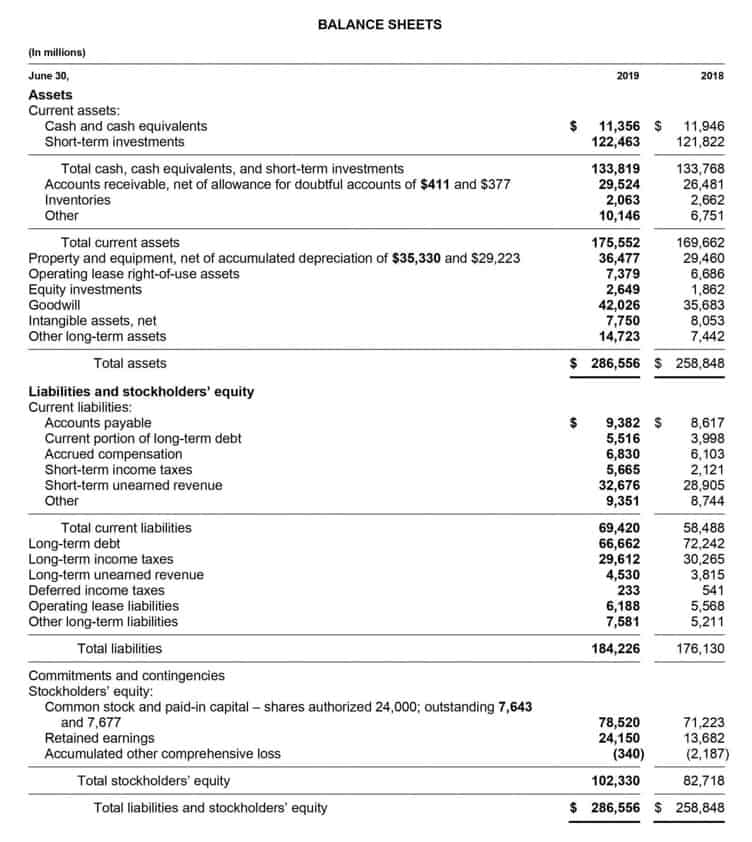
The cash flow balance sheet reports the assets, liabilities, and owner’s (stockholders’) equity at a specific point in time, such as December 31. The balance sheet is also referred to as the Statement of Financial Position. The cash outflows spent to purchase noncurrent assets are reported as negative amounts since the payments have an unfavorable effect on the corporation’s cash balance. This is the property, plant and equipment that will be used in the business and was acquired during the accounting period.

  • Liabilities also include amounts received in advance for a future sale or for a future service to be performed.
  • Notes are an integral component that significantly enhances the transparency and usability of financial statements.
  • These supplementary details can reveal critical information that might otherwise remain hidden within the standard financial reports, ultimately providing a more complete picture of your company’s performance and position.
  • Any contingentliability shall be disclosed in the notes to financial statements since theycan’t be reported on the financial statements.
  • Financial statement notes often hold critical information that can significantly alter an investor’s perception of a company’s financial health.
  • The employee benefits note details the company’s retirement plans, health insurance, and other benefit programs provided to employees.

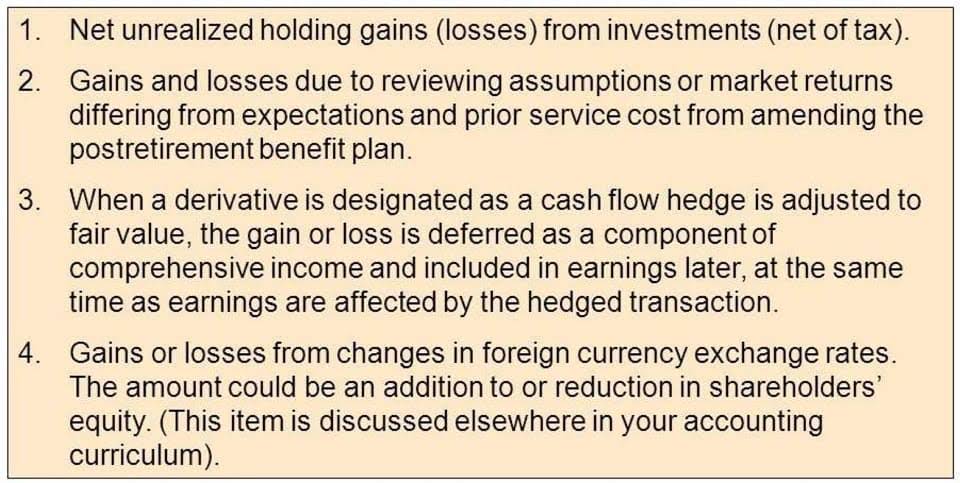
Net Income’s Impact on Retained Earnings and Comprehensive Income

  • They serve as a means to enhance transparency, improve understanding, and enable stakeholders to make informed decisions.
  • They include key accounting policies, the methods used to calculate certain values, and any assumptions the company made.
  • In an ever-changing economic landscape, the ability to derive insights from detailed financial statement notes is more critical than ever.
  • Learn about their components, significance, and how they enhance the understanding of financial data.
  • The balance sheet, which is also known as the statement of financial position, reports a corporation’s assets, liabilities, and stockholders’ equity account balances as of a point in time.
  • Contingent Liabilities and CommitmentsDiscusses potential obligations that may emerge from past events, depending on future outcomes.

However if the Company would not have applied revaluation model, but the cost model, its PPE and equity would have not looked that great. One small note said that the Company was applying revaluation model to its PPE and as there are no market values available, the company determined fair value by using “3rd level of inputs” into the fair value model. Forget the overly technical lingo and aim for clear, straightforward language. notes to financial statements If someone outside of your finance department can’t make sense of it, rewrite it.

notes to financial statements

Employee benefits

notes to financial statements

In addition to the annual consolidated financial statements, the publicly-held corporation will issue quarterly consolidated financial statements. Equity, often referred to as shareholders’ equity in corporations, is the residual interest in the assets of an entity after deducting liabilities. It’s the net worth of a business from an accounting perspective, comprising amounts invested by shareholders and earnings retained within the company. They represent probable future economic benefits obtained or controlled by an entity due to past transactions or events.

Create a free account to unlock this Template

Segment reporting breaks it down—whether it’s tech, manufacturing, or any other division. Notes tell you what’s actually happening, so you don’t just stare at confusing numbers. The GAAP requiresyou to disclose any subsequent events, the conditions of which existed beforethe year ended. A decrease in the value of a long term asset to an amount that is less than the amount shown under the cost principle.

notes to financial statements

Definition of Notes to Financial Statements

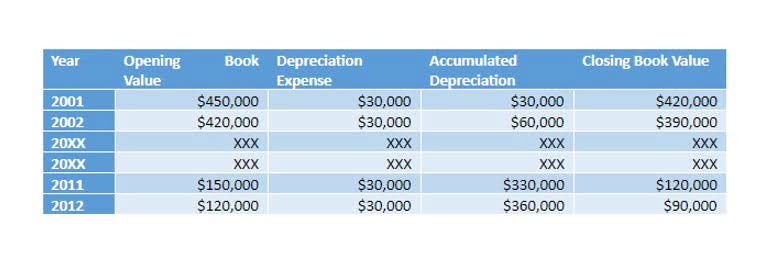
  • It also means that the total of the depreciation expense over the asset’s useful life cannot exceed $400,000.
  • Not all disclosures need a full-blown footnote—sometimes a simple parenthetical explanation works magic.
  • Here, you need to go line by line and describe each line item in the financial statements.
  • For example, a school district might have a fiscal year of July 1, 2023 through June 30, 2024.
  • For instance, instead of using technical jargon, a company might explain complex accounting treatments in straightforward terms, making it easier for stakeholders to grasp the underlying concepts.
  • He is known for his pragmatic approach to fiscal policy and governance.

They explain the “why” and “how” behind the financial results, helping you make more informed decisions. Because operating leases don’t show up as liabilities, whereas finance leases do. So, understanding how leases are classified can give you a more accurate view of a company’s financial health.

Accounting policies

If a company issues debt after year-end, it won’t appear in the statements but will be disclosed here. A note buried on page 45 might reveal that “the company’s largest customer accounts for 40% of revenue.” Losing that client could be catastrophic. StudySmarter is a globally recognized educational technology company, offering a QuickBooks Accountant holistic learning platform designed for students of all ages and educational levels. We offer an extensive library of learning materials, including interactive flashcards, comprehensive textbook solutions, and detailed explanations.

Capital lease vs: operating lease: Which is Right for Your Business

The company that rents it, the lessee, pays regular fees to the owner, the lessor. The offsetting entry recorded is the capital lease liability account, which we’ll set equal to the ROU asset, i.e. link to the $372k from the prior step. Conceptually, a capital lease can be thought of as ownership of a rented asset, while an operating lease is like renting any type of asset in the normal course.

No bargain purchase option

Some tenants may succeed in requiring the landlord to use their USF rather than GSF for these calculations, but likely only where the unusable space comprises a large portion of the premises or detracts in a material way from tenant’s use. Relied upon mainly in multitenant office building sites, RSF generally includes USF plus all areas that may be usable by a given tenant not exclusively, but rather jointly with (some or all) other tenants. In such office space sites, premises are often configured differently, with some tenants leasing entire (or multiple) floors and others sharing floors with one or more additional tenants. These differing configurations render unworkable the more straightforward pro-rata share calculation used in retail leases, as it is less discernible which common areas or other unusable spaces benefit which tenants. If you want to have more control and ownership of the asset, a capital lease may be preferable. If you want to have more flexibility and less risk of the asset, an operating lease may be better.

According to a 2022 study by the Equipment Leasing and Finance Association (ELFA), small businesses increasingly rely on leases to control cash flow and avoid major upfront expenses. While both capital and operating leases provide access to necessary resources, their differences can significantly influence a firm’s balance sheet, tax strategy, and flexibility. Below, we explore how each lease type works, why some businesses prefer one approach, and how these choices map onto broader financial goals. The accounting for leases depends on the type and terms of the lease agreement, as well as the accounting standards and policies adopted by the entities involved.

Financial Implications of Operating Leases

The guidance was a response to “off-balance-sheet financing,” where lease obligations were not on a company’s balance sheet, potentially obscuring its true financial position. FAS 13 established criteria to determine when a lease was economically similar to a purchase and should be accounted for accordingly. According to GAAP rules, a capital lease agreement has special treatment. The lessee must show the leased asset and its lease liability value on their balance sheet.

Present Value of Lease Payments

  • Lessees who report under US GAAP (ASC 842), follow a two-model approach for the classification of lessee leases as either finance or operating.
  • A manufacturing firm engages in a capital lease for a new industrial press valued at $500,000 with a lease term matching the press’s useful life of 10 years.
  • Also, factor in the tax implications and the impact on your financial statements of each option.

The lessor retains responsibility for the asset, and the lessee simply pays for its use. These leases typically have shorter durations, often less than the asset’s useful life, and generally lack a purchase option. Under this structure, the lessee records the leased asset and a corresponding liability on their balance sheet, emphasizing the financial impact. In essence, a capital lease resembles a financing agreement that assigns many ownership responsibilities to the lessee. When assessing lease payments under ASC 842, unlike ASC 840, if a portion of property taxes or insurance is considered a lease payment, then it should also be included for the purposes of this classification test. For most situations, if the present value of the lease payments to be made over the lease term exceeds 90% of the fair value of the asset, then the lease is considered a finance lease.

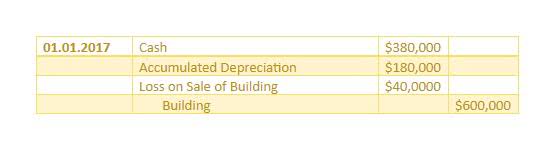
On the balance sheet, you put the current market value of the asset at the time of purchasing. Then over time, you calculate the depreciation of the asset as a loss. In business, operating leases enable lessees to use leased assets similarly to fixed assets during business operations. This arrangement is temporary, however, as these leased assets are eventually returned to the lessor with some remaining useful life.

Ownership and risks

It’s suitable when a company intends to keep the asset beyond the lease term. This resurgence underscores the importance of Capital Lease vs. Operating Lease decisions in today’s business environment, where choosing the right lease option can significantly impact a company’s operational agility and financial health. As the market recovers and expands, businesses have unique opportunities and challenges in leveraging real estate and other assets for sustainable growth. The companies should carefully analyse the financial requirement and objectives along with the terms of the agreement before selecting the type of lease.

Forward-Looking CAM Budgets: Lease Management Solutions That Anticipate Costs

Capital leases are recorded on the balance sheet by recognizing the leased asset as a fixed asset and the lease obligation as the corresponding liability. This treatment reflects the lessee’s acquisition of the asset and the assumption of debt. By providing specific answers, it determines whether a lease is treated as a capital or operating one. This aids in correct accounting and financial report preparation. On different occasions, a business may rent an office for just 3 years. A capital lease is a like a loan that lets a company use an expensive thing, like a building or machines, for a long time.

These agreements offer flexibility, allowing companies to use assets for a specific period while avoiding the complexities of ownership. However, the financial implications of operating leases go beyond their apparent convenience. In this section, we will delve into the various aspects of operating leases and explore their impact on a company’s financial health. Previously, operating leases avoided balance sheet recognition, which helped maintain a favorable financial profile. With the adoption of new accounting standards, operating leases now impact financial ratios similarly to capital leases, though their simpler structure still offers some advantages. Another angle to consider is that lenders or investors might see capital leases as a sign of stability—indicating the business commits to essential production infrastructure.

This includes proper depreciation and interest expense recognition. Such automation improves financial transparency while helping organizations meet reporting requirements. Conversely, a graphic design company signs an operating lease for office space for $3,000 monthly, amounting to $36,000 annually, over a 2-year term. This lease includes no option to purchase the office space and no transfer of ownership rights. Capital leases typically span a substantial portion of the asset’s useful life, with lease payments equal to or exceeding its value.

Now, think of a small business leasing a printer for just two years. With a capital lease, both the asset’s value and the debt for it are there, balancing the equation. For an operating lease, the company doesn’t list the asset or the debt at first. For a capital lease, the lessee not only adds the asset to their books but also the debt for it. They also show how the asset wears out over time and the loan interest.

The lease contains a bargain purchase option that allows the lessee to buy the asset at a price that is significantly lower than its fair market value at the end of the lease term. Leasing involves a contractual relationship between the lessee and the lessor, which is governed by the terms and conditions of the lease agreement, as well as the relevant laws and regulations. The lease agreement specifies the rights and obligations of both parties, such as the duration, payment, maintenance, insurance, termination, and renewal of the lease. The lease agreement also defines the remedies and consequences in case of breach, default, or dispute. Operating leases are suitable for short-term needs or for accessing frequently updated or replaced assets. This option allows businesses to respond to market changes and technological advancements.

Businesses must carefully evaluate the implications of different lease structures on their balance sheet, income statement, and cash flows. Additionally, tax considerations and cash flow forecasting play vital roles in lease contract evaluations. Consequently, leases often include provisions to pass along such expenses to tenants by imposing separately calculable Opex charges. These provisions are important, and they are often an insufficiently-reviewed part of a lease negotiation. Now let’s consider a well-established manufacturing company that requires a new production facility to meet growing demand.

  • The lessee must show the leased asset and its lease liability value on their balance sheet.
  • To summarize, a right-of-use asset and a lease liability must be established at lease commencement (or transition to ASC 842), and then reduced over the remaining lease term in addition to recording the cash payment and lease expense.
  • It particularly suits industries where the asset’s lifecycle exceeds the standard periods covered by operating leases.
  • Two common types of leases that businesses often encounter are capital leases and operating leases.

Capital lease equipment is considered an asset and liability, which leads to ownership at the lease’s end. On the other hand, operating leases keep the equipment off the balance sheet. A capital lease often features a bargain purchase option that allows the lessee to purchase the leased asset at a price significantly below its reasonable value at the end of the lease period. Meanwhile, operating leases either do not include a bargain purchase option or set the price near the asset’s reasonable value at the time of the lease’s conclusion. The distinction between capital leases and operating leases merely comes down to whether there are ownership characteristics, which determine the presentation of the lease on the financial statements.

To illustrate the practical differences between capital lease vs operating lease, consider these examples. Each scenario highlights how the type of lease affects financial reporting and asset management. With capital leases, lessees can claim depreciation and interest expenses, potentially lowering taxable income. Operating leases allow the full lease payment to be deducted as a business expense. A capital lease typically results in the transfer of ownership to the lessee at the end of the lease term.

As with the other issues described in this article, landlords and tenants rarely agree on the extent to which each of the primary Opex categories are included as additional rent. This section will discuss some of the issues with respect to the primary Opex categories. The lessee cannot claim the tax benefits of owning the asset, such as depreciation and interest deductions. The lessee has to report a higher amount of liabilities on its balance sheet, which may affect its debt-to-equity ratio and credit rating.

If the asset is non-essential or subject to rapid capital leases and operating leases technological changes, an operating lease may be more appropriate. The lessee has to pay higher lease payments than an operating lease, as they include the principal and interest components. The lessee can use the asset for a longer period of time than the lease term, if it has a bargain purchase option or a residual value guarantee. With capital leases, the lessee bears the risk of obsolescence, as they effectively own the asset. This can be a significant downside for technology or equipment rapidly becoming outdated. A lease is a contractual agreement between the lessor (owner of the asset) and the lessee (rents the asset).

Information for Participants

Look for transparent 401(k) management fees, digital automation and fiduciary support. Many companies match contributions made by their employees, up to a certain percentage of their salaries, often 4 or 5 percent. The 401(k) match is one of the key benefits of the plan, and can supercharge employees’ ability to accumulate money for retirement. Both employees and employers can contribute to a SIMPLE IRA (Savings Incentive Match Plan for Employees). Employee contributions are tax-deferred and employers must make either a matching contribution or a nonelective contribution. Inclusive strategies, like automatic enrollment and clear education, help employees feel seen, supported and valued.

The smart, streamlined retirement option for small businesses

When your payroll and retirement plan are with ADP, our advanced technology seamlessly integrates data and information across both platforms to help simplify plan administration and reduce compliance risk. We transmit data in real time and check for discrepancies, as well as transfer funds quickly and generate trades for your plan participants. Your employee data remains secure within ADP’s ecosystem and is not transmitted to third parties. An easier-to-administer safe harbor 401(k) plan makes it less complicated for small businesses to provide a retirement plan to employees. This plan does require that businesses make mandatory contributions for employees, but there are tax credits available to help businesses offset the costs of starting a retirement plan. Robo-advisor Betterment offers three tiers of service at various price points.

What are the benefits of offering retirement plans for employees?

  • I recently graduated from grad school and got a job and they offer 401K managed by ADP.
  • Tax-deferred savings, employer matches and the power of compounding are all opportunities that pass by.
  • And when it comes to implementation, we make it easy, with a specialized ADP manager to help ensure the process runssmoothly.

In both options, as an independent record keeper, ADP is able to provide retirement 401k plan investment options without any bias or agenda. Offering a 401(k) plan is more affordable for small businesses than ever, thanks to new tax credits introduced by the SECURE 2.0 Act. ADP provides different 401k programs that readily meet the unique needs of your business and allow employees to contribute wages to their retirement account.

Employer match

Our retirement plan solutions readily meet the unique needs of your business regardless of how many employees you have. Additionally, when employees consolidate their assets in your company’s plan, it can improve overall plan health. Metrics, like average account balances and participation rates may increase, making the plan more attractive to employees and prospective hires. A well-managed, high-asset 401(k) plan can be an important part of recruiting and retaining top talent.

adp401

Find my paycheck/paystub

Here are the best 401(k) plans by provider and some key facts about each. Recent provisions in SECURE 2.0 may make offering a 401(k) plan more affordable than ever. Employers should regularly review eligibility rules to confirm they’re aligned with their business needs and not unintentionally limiting participation or creating inequities across their workforce. Employers looking to improve participation may want to revisit waiting periods altogether. Offering immediate or early eligibility sends a strong message that everyone is invited to plan for the future.

Employees can run scenarios, track their savings progress and get quick answers without getting overwhelmed. “You have the opportunity to invest in your future starting today” lands better than a generic reminder to log in. When new hires must wait months to become eligible or when enrollment is buried in paperwork, many never sign up. When saving for retirement, small percentages can make a big difference. A great opportunity to gain insights into how young professionals aged 25-35, save, invest and manage their expenses.

While some providers waive setup fees as an incentive, others charge depending on plan complexity and the level of customization required. Once your plan is setup, it’s time to communicate the new benefit to your employees. Required notices must be distributed and employee enrollment meetings scheduled. The offers that appear on this site are from companies that compensate us.

Offering retirement plans to your employees can attract top talent, enhance employee satisfaction, and potentially provide tax benefits for your company, all while helping employees save for the future. They can walk employees through enrollment, explain investment options and provide one-on-one support. ADP’s retirement counselors are trained to simplify complex decisions and help employees feel confident in their next step. The key difference from a traditional 401(k) plan is that a safe harbor 401(k) plan requires mandatory employer contributions.

  • Metrics, like average account balances and participation rates may increase, making the plan more attractive to employees and prospective hires.
  • For employees managing student debt, SECURE 2.0 provisions allow employer matching contributions based on qualified student loan payments.
  • There are plans designed for sole proprietors as well as companies with employees and each plan type has its own requirements and features.
  • Those age 50 and older can make a “catch-up” contribution of up to $7,500.

Secondly, out of sight means out of mind and accounts that are left behind don’t get the attention they need. Employees may not keep their beneficiary designations up-to-date or accurately track their required minimum distributions. ADP delivers benefits across your business with easy administration and interactive resources to keep employees engaged. Onboarding includes creating the plan document, educating employees and connecting systems.

Small businesses and self-employed individuals are especially vulnerable to unexpected costs and administrative headaches. Many users recommend switching to adp401 providers like Fidelity, Vanguard, or Schwab for lower fees and better support. A 401(k) is a tax-advantaged retirement plan offered by employers that allows employees to contribute and invest a portion of their salary. Contributions are automatically deducted from an employee’s paycheck and can then be invested in potentially high-return investments such as index funds. This setup makes it easy for employees to save without having to think about it.

A younger workforce in tech may want mobile-first tools and gamified learning. Professionals in financial services might want deeper investment detail. A manufacturing workforce may need bilingual resources and in-person walkthroughs. Financial wellness programs are rapidly becoming an essential benefit as employees navigate challenges like student loans, high housing costs and the need to save for retirement.